Express tunnel chemistry
Car Wash Tunnel Chemicals for Express Tunnel Car Washes
Bug prep, presoaks, foamers, wrap lubricant, triple foam and ceramic finishes, matched to your friction, touchless or hybrid tunnel. More cars per hour at a lower cost per car.

- 5 stages presoak to finish
- 80–100 ft typical express tunnel
- Up to 90% water reuse with reclaim
- Hybrid-ready friction and touchless
How a tunnel works
How an Express Tunnel Car Wash Uses Chemistry
An express tunnel moves vehicles on a conveyor through a building usually 80 to 100 feet long. Arches apply presoak, wheel cleaner, detergent, foam and finishing products in a fixed sequence, so each chemical gets only seconds to work.
That is why tunnel performance depends on chemistry as much as equipment. Proper dosing, water quality management and formulas matched to friction, touchless or hybrid setups keep every 90-second wash consistent.
Wash process
Car Wash Tunnel Chemicals Used at Each Stage
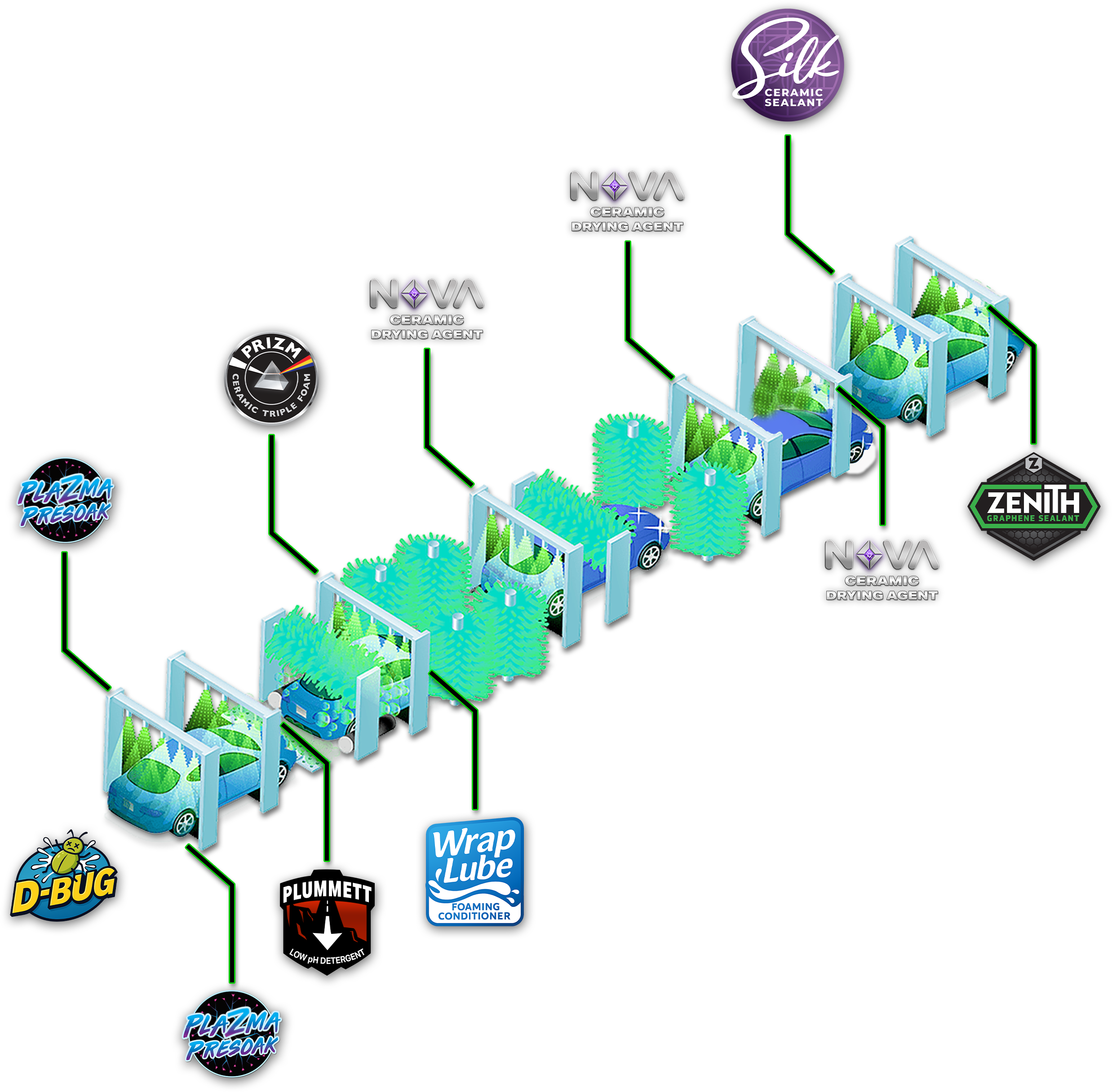
Five stages from entrance to exit, with the products we recommend for each.
1
Stage 1 · High-pH presoak
Bug prep and presoak
Alkaline presoaks soften bugs and break down road film and wheel grime before the vehicle reaches the brushes or high-pressure arches.


2
Stage 2 · Low-pH detergent
Foam and neutralize
A low-pH foaming detergent neutralizes alkaline carryover and loosens inorganic soil.

Plummett is a low-pH tunnel foamer that produces heavy white foam to neutralize alkaline carryover. Apply through a foam stick, shower head, pod or foam curtain.
3
Stage 3 · Main wash and lubrication
Protect paint under the brushes
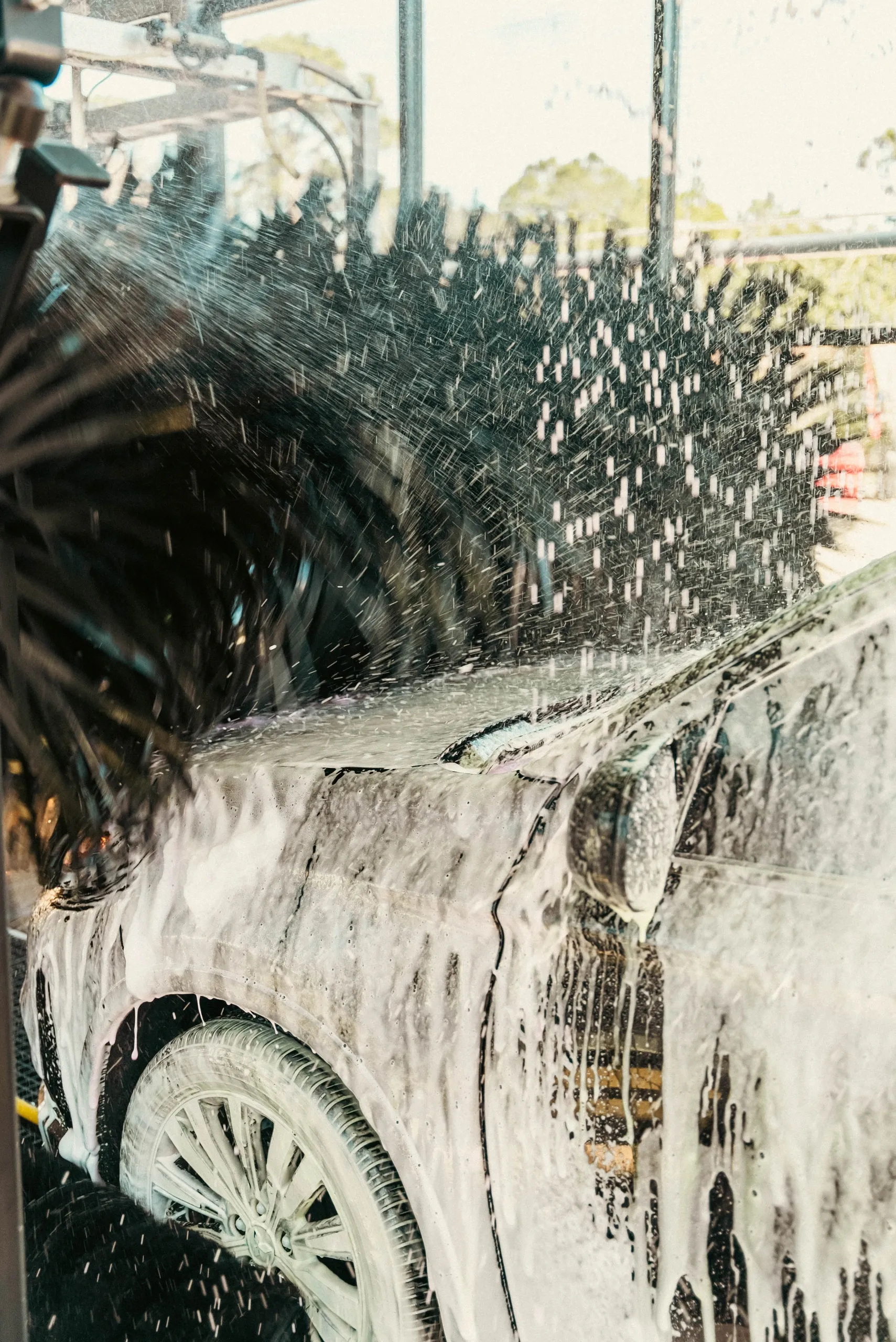
Friction tunnels need lubricating detergents so cloth and wraps glide, lift dirt and avoid swirl marks.

Wrap Lube is a lubricating detergent that reduces squeaking and grabbing on wraps and brushes. Apply directly to wraps or through a foam applicator.
4
Stage 4 · Triple foam polish
Shine customers can see
Colored triple foam improves rinsing, adds gloss and sells upgrades.

Prizm is a ceramic-enhanced triple foam polish that adds shine and improves rinsing. Apply with a foam generation applicator at the triple foam stage.
5
Stage 5 · Drying agent and protectant
Dry, seal and finish
Nova sheets water for the dryers and adds ceramic gloss. Then apply one sealant finish, either Silk ceramic or Zenith graphene, not both.
Nova is a ceramic drying aid that adds gloss and protection near the end of the tunnel. Apply under low pressure.
Then one sealant finish: ceramic or graphene

Silk is a ceramic finish that leaves paint and glass smooth and glossy. Apply under low pressure through spray nozzles on an arch or rain bar.

Zenith is a graphene finish for shine, protection and a smoother surface. Apply under low pressure through an arch or rain bar.
Browse tunnel high-pH presoaks, detergents, triple foam, drying agents and ceramics and graphene.
Friction vs touchless
Friction vs. Touchless Tunnel Chemistry
| Friction tunnel | Touchless tunnel | |
|---|---|---|
| Cleaning method | Brushes or soft cloth mitters | High water pressure, no contact |
| Key chemistry | High-lubricity soaps such as Wrap Lube | Concentrated high- and low-pH presoaks |
| Foam | Rich, stable foam that resists collapse under agitation | Clinging foam for dwell time |
| Main risk | Grabbing and swirl marks from unlubricated wraps | Film left behind if presoaks are too weak |
| Soil removal | Lubricating polymers plus mechanical action | Emulsifiers and suspension agents lift dirt |
Targeted chemistry
Match Tunnel Chemistry to the Soil
Organic soil
Bugs, oil and grease need high-pH saponification.
Inorganic deposits
Rust and minerals respond to low-pH cleaners.
Hard water
Chelators and sequestrants keep foam stable and the rinse spot-free.
Brush marks
Lubricating polymers let friction equipment glide smoothly.
Results
Friction and Touchless Tunnels in Action
Compare a friction tunnel and a touchless tunnel running CarWashSoap.com chemistry at Ronny’s Car Wash, then hear from Moo Moo Express Wash, a partner since 2009.

Why it pays
Benefits of Premium Car Wash Tunnel Chemistry
Higher throughput
Consistent chemistry keeps the conveyor moving, depending on tunnel length, arch count and speed.
Lower chemical cost
High-dilution concentrates hold cleaning strength at leaner ratios.
Water reuse
Up to 90% of water can be reused when paired with an effective car wash reclaim system.
More upsells
Bright triple foam and conditioner stages can lift upsells by up to 20%.
Longer equipment life
Better lubrication, balanced pH and less scale buildup protect brushes, wraps and pumps.
Fewer redos
Less carryover between vehicles and fewer spotting complaints.
Seasonal and regional
Adjust Tunnel Chemistry by Season and Region
| Condition | Adjustment |
|---|---|
| Winter | Stronger presoaks with anti-corrosion additives for road salt |
| Spring | More emulsifiers for pollen, tree sap and early organic buildup |
| Summer | Bug-removal presoaks with protein-digesting agents |
| Fall | Balanced pH sequencing for leaf residue, dust and early winter grime |
| Midwest | Chelator-rich formulas for hard water and spotting |
| Coastal | Corrosion inhibitors to protect against salt and protect undercarriages |
| Urban | Stronger wheel and body cleaners for brake dust and road film |
Optimization
Run Tunnel Chemistry as an Ongoing Process
Test water monthly
Check hardness, pH and TDS at key points in the reclaim loop.
Audit the wash
Collect feedback on spotting, foam and drying from your team.
Trial one change at a time
Run two-week trials and change one variable per test.
Review quarterly
Adjust dilution for the season and review formulas when soils or additives change.
Want help? Our car wash chemical support team runs site audits, dosing calibration and reclaim-water testing.
Washes we support
Express Tunnels We Support


FAQ
Car Wash Tunnel Chemicals FAQ
What chemicals does a tunnel car wash use?
An express tunnel typically runs five chemical stages: a high-pH presoak and bug prep (D-Bug, Plazma), a low-pH foaming detergent (Plummett), a lubricating detergent for friction equipment (Wrap Lube), a triple foam polish (Prizm), and a drying agent such as Nova ceramic hybrid, followed by one sealant finish: Silk ceramic or Zenith graphene.
What is an express tunnel car wash?
An express tunnel car wash moves vehicles on a conveyor through a building that is usually 80 to 100 feet long. Arches apply presoak, wheel cleaner, detergent, foam, rinse and finishing products in sequence, so a car can be washed in about 90 seconds.
Do tunnel car washes scratch paint?
Well-run friction tunnels use soft cloth plus lubricating soaps that let the material glide and lift dirt instead of dragging it. Unlubricated wraps can grab paint and leave swirl marks, which is why a friction lubricant like Wrap Lube matters. Touchless tunnels avoid contact entirely and rely on stronger presoaks.
What is the difference between friction and touchless tunnel chemistry?
Friction tunnels use brushes or soft cloth and need high-lubricity soaps with stable foam that resists collapse under agitation. Touchless tunnels use high water pressure and more concentrated high- and low-pH presoaks that emulsify and suspend soil without contact.
What does a car wash bug prep do?
A bug prep like D-Bug softens bug residue and heavy organic soil at the entrance of the tunnel, so the presoak and brushes can remove it in one pass. Apply it through an arch or with a wand before the brush stage.
What is a car wash foamer?
A car wash foamer is a detergent that generates thick foam for coverage and dwell time. Plummett is a low-pH foamer that also neutralizes alkaline carryover from the presoak stage.
How much water can a car wash reclaim system reuse?
With an effective reclaim system, up to 90% of wash water can be reused without performance loss. Reclaim-compatible chemistry with chelators and sequestrants keeps tanks, filters and spray nozzles free of buildup.
How should tunnel chemistry change by season?
Use stronger presoaks with anti-corrosion additives for winter road salt, more emulsifiers for spring pollen and sap, protein-digesting bug presoaks in summer, and balanced pH sequencing for fall leaf residue and dust.
How often should I test water in a tunnel car wash?
Test water hardness, pH and total dissolved solids (TDS) monthly at key points in the reclaim loop, and adjust dilution rates seasonally as soil conditions change.
How should I run a car wash chemical trial?
Run trials for about two weeks and change only one variable at a time. Record spotting, foam and drying results, collect feedback from your team, and review formulations quarterly.
How do I get tunnel chemicals from CarWashSoap.com?
Fill out the form on this page or call (952) 985-9993. A specialist will review your tunnel length, equipment and water, recommend products and dilution settings, and set up bulk delivery.
Get started
Get a Tunnel Chemical Recommendation
Tell us your tunnel length, equipment and water conditions. We will recommend a full chemical lineup and dilution settings, then deliver in bulk.
- Tell us about your wash Fill out the form or call us.
- Get a chemical plan A specialist recommends products and dilution settings for your equipment and water.
- Bulk delivery and on-site support We deliver and help dial in your system.
Prefer to talk? Give us a call › Keep your backroom organized with the EZ System chemical storage tank.
This site is protected by reCAPTCHA and the Google Privacy Policy and Terms of Service apply. Our Privacy Policy also applies.
